4th Of July Wiki Facts 2024: A Comprehensive Guide To Independence Day
4th of July Wiki Facts 2024: A Comprehensive Guide to Independence Day
Related Articles: 4th of July Wiki Facts 2024: A Comprehensive Guide to Independence Day
- 4th Of July Solitaire 2024: A Patriotic Game Of Patience And Strategy
- 4th Of July Outfits 2024: Celebrate Independence Day In Style
- Celebrate The Spirit Of Independence With Enchanting 4th Of July Cards For Sale 2024
- 4th Of July Events Near Me 2024: Celebrating Independence Day Post-COVID
- 4th Of July Crafts For Kids Printable 2024: Celebrate Independence Day With Fun And Creative Activities
Introduction
With great pleasure, we will explore the intriguing topic related to 4th of July Wiki Facts 2024: A Comprehensive Guide to Independence Day. Let’s weave interesting information and offer fresh perspectives to the readers.
Table of Content
Video about 4th of July Wiki Facts 2024: A Comprehensive Guide to Independence Day
4th of July Wiki Facts 2024: A Comprehensive Guide to Independence Day

Introduction
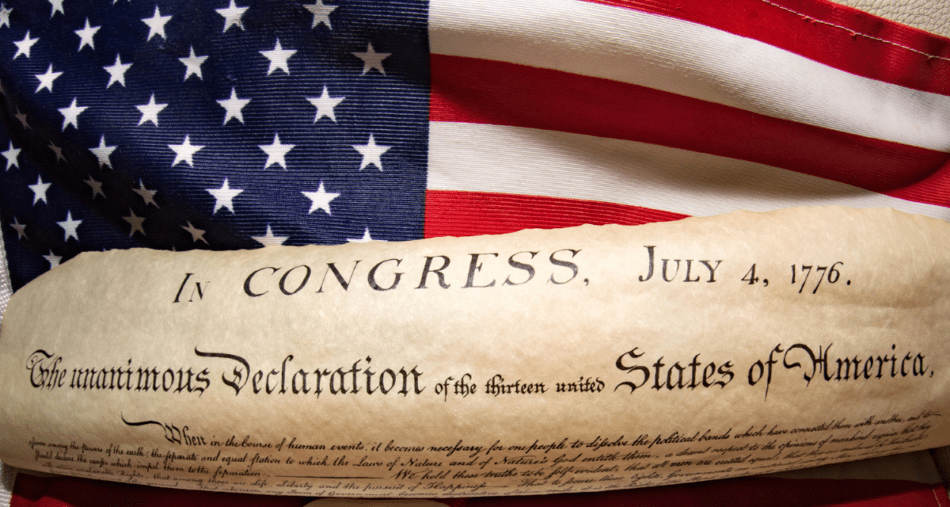
The 4th of July, also known as Independence Day, is a federal holiday in the United States commemorating the adoption of the Declaration of Independence on July 4, 1776. This pivotal document declared the thirteen American colonies’ independence from Great Britain, marking the birth of a new nation.
Historical Significance
The American Revolution, which culminated in the Declaration of Independence, was a protracted struggle for freedom and self-determination. The colonists resented British rule and its oppressive policies, such as taxation without representation. After years of protests and armed conflicts, the Continental Congress adopted the Declaration of Independence, drafted primarily by Thomas Jefferson.
The Declaration of Independence
The Declaration of Independence is a powerful and eloquent document that articulates the fundamental principles upon which the United States was founded. It asserts the inherent rights of all individuals to life, liberty, and the pursuit of happiness. It also establishes the government’s purpose as securing these rights and derives its authority from the consent of the governed.
Celebrations
Independence Day is celebrated throughout the United States with a variety of festivities. These include:
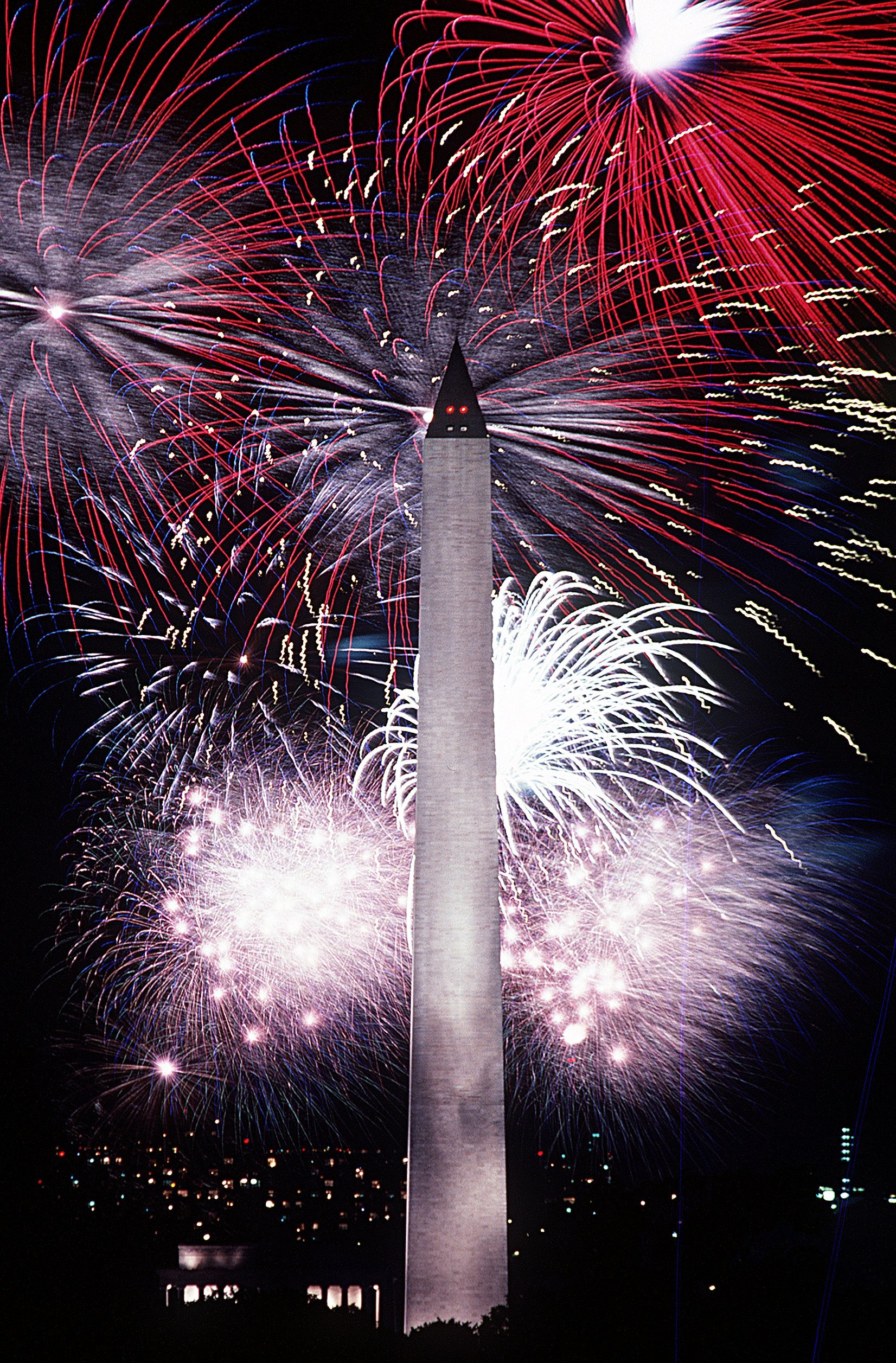
- Fireworks Displays: Spectacular fireworks displays illuminate the night sky across the country, symbolizing the nation’s birth and the bright future ahead.
- Parades: Colorful and vibrant parades showcase local communities, featuring marching bands, floats, and patriotic displays.
- Picnics and Barbecues: Families and friends gather for picnics and barbecues, enjoying traditional American cuisine such as hamburgers, hot dogs, and potato salad.
- Concerts and Performances: Live music, concerts, and other performances entertain crowds in parks and public spaces.
Traditions
Over the centuries, several traditions have become synonymous with Independence Day celebrations:
- Wearing Red, White, and Blue: Americans proudly display the colors of the American flag in their clothing, decorations, and accessories.
- Singing Patriotic Songs: The national anthem, "The Star-Spangled Banner," is sung at various events, evoking feelings of pride and patriotism.
- Reading the Declaration of Independence: Public readings of the Declaration of Independence are often held to remind citizens of the principles upon which the nation was founded.
Historical Facts
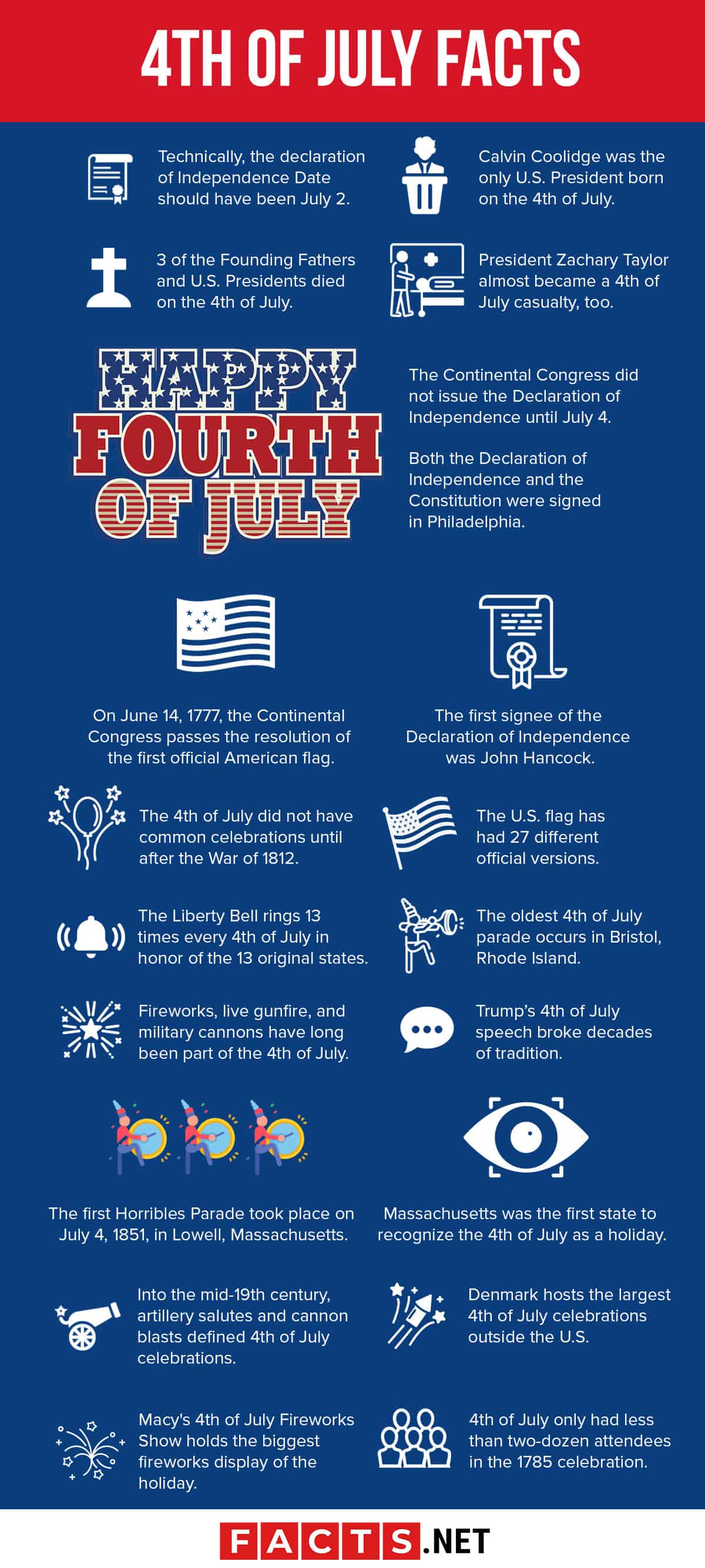
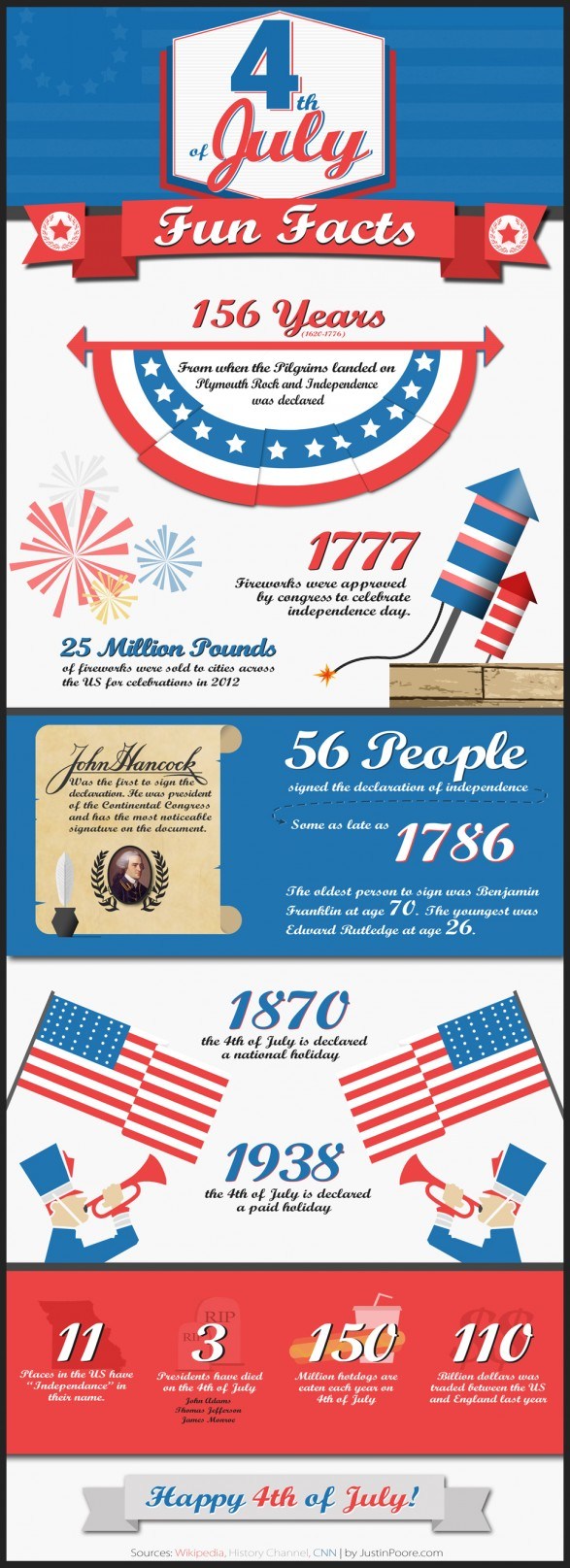
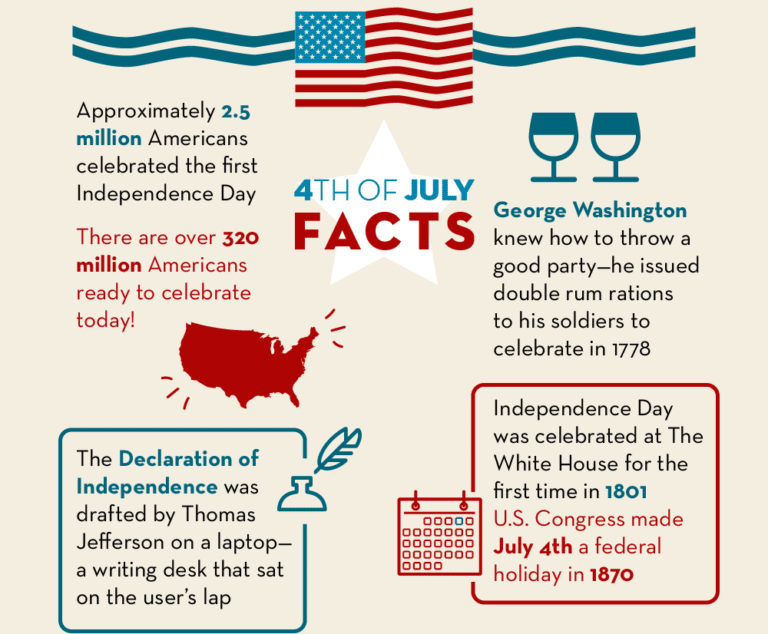
- The first Independence Day celebration was held in Philadelphia in 1777.
- The Liberty Bell, a symbol of American independence, was rung to announce the first public reading of the Declaration of Independence.
- John Adams, one of the signers of the Declaration of Independence, predicted that the 4th of July would become a day of "great pomp and parade."
- The United States Postal Service issued its first commemorative stamp for Independence Day in 1861.
- The first official fireworks display for Independence Day was held in Boston in 1811.
Contemporary Significance
Independence Day remains a vital holiday in the United States, serving as a reminder of the nation’s founding principles and its ongoing commitment to freedom and democracy. It is a day to celebrate the nation’s heritage, unity, and aspirations for the future.
Conclusion
The 4th of July is a day of immense historical significance and national pride for the United States. It commemorates the birth of a nation founded on the principles of liberty, equality, and the pursuit of happiness. Through its vibrant celebrations and cherished traditions, Independence Day continues to inspire and unite Americans of all backgrounds.



Closure
Thus, we hope this article has provided valuable insights into 4th of July Wiki Facts 2024: A Comprehensive Guide to Independence Day. We thank you for taking the time to read this article. See you in our next article!